
Inside the Almond Orchard: A Conversation on UC Merced’s AI Driven Irrigation Project
By Lauryl Gonzalez
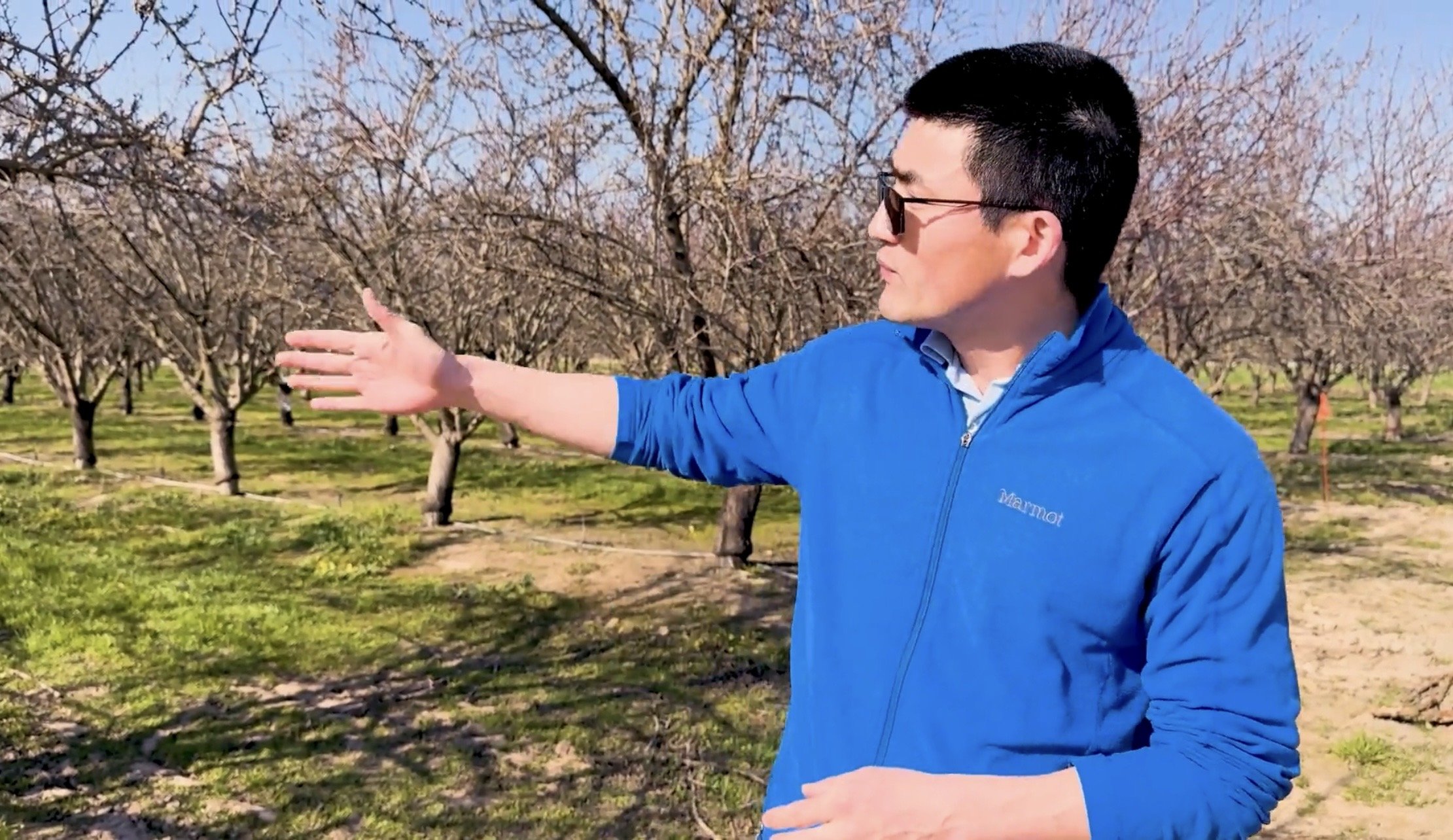
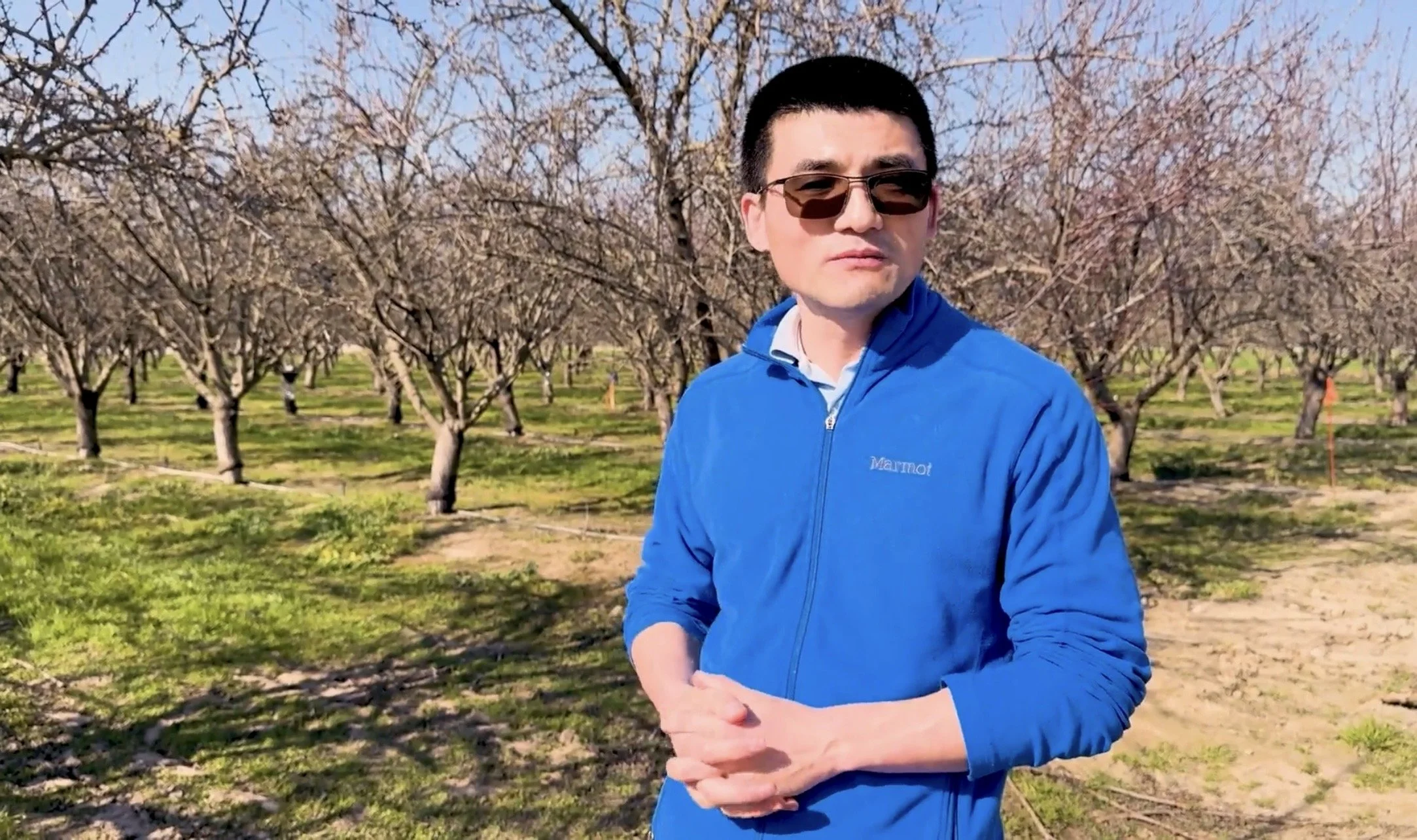
An AI driven crop irrigation system developed by a group of scientists and researchers at UC Merced is coming to fruition.
The project “UC Merced Climate Action Research Seed Fund” was led by Dr. Wan Du an associate professor in the Department of Electrical Engineering and Computer Science, and a team of scientists including Dr. Stefano Carpin a professor in the School of Engineering and funded by the university’s climate change research grant. The irrigation system is designed to help almond farmers produce with greater efficiency along with advancing water conservation in a region known for droughts.
While the three year grant is now completed Du and the team plan to continue with the innovation, and have goals of bringing it to the agricultural industry not only in Merced but in the Central Valley. They also have goals to have it go beyond almonds and to other fruits and nuts including pistachios
UC Merced’s Climate Change Research Grant supported a three‑year effort to build one of the first real‑farm testbeds for reinforcement‑learning‑based smart irrigation. As the project concluded, journalist Amy Wu sat down with Du for a final conversation that captured both scientific progress and the realities of deploying technology in the field.
Du says that the farm‑deployed testbed is fully operational and collecting performance data to verify the system. Early findings show the reinforcement‑learning system outperforming ET‑based irrigation, which uses evaporation and plant water‑use estimates to decide when irrigation should occur, and rule‑based irrigation, which follows fixed schedules or preset moisture thresholds.
The interview also highlighted the challenges of real‑world deployment. As he explains, “There are many factors that we cannot imagine in the lab,” pointing to nighttime system failures, parameter issues, and animals damaging pipes and sprinklers.
Looking ahead, the team hopes to commercialize the technology once the patent is issued and adapt it for other crops such as pistachio. The project has supported scholars across disciplines, and future phases will expand collaboration as climate‑resilient irrigation continues to evolve.
We recently connected with Du to discuss the project’s evolution, the challenges and opportunities from real‑world deployment, and what’s next for AI‑driven irrigation. Scroll down to learn more.
What is the next stage of the research as the climate‑change grant wraps up?
A: “This is actually the end of this project. The test bed we deployed in the farm is working and we are collecting data and verifying the performance of the proposed smart irrigation system.”
He added, “We already have the paper… but we are collecting data. And we hope that we can collect more data to justify the performance of the proposed system.”
What findings or patterns have emerged so far?
A: “What we found is that the proposed smart irrigation system based on reinforcement learning is better than the ET‑based method and the rule‑based method… in terms of water saving and crop health.”
He noted, “Yeah, this is what we expect. Yeah, no surprise.”
What significant challenges did the team encounter during this phase?
A: “There are many challenges. The most significant challenge is to maintain the system.”
He explained, “When we move the system in field, there are many factors that we cannot imagine in the lab… the system sometimes fails at night… eventually we found that there is a parameter in the system. We didn’t consider the practical challenges in the farm.”
He also shared, “We also need to battle with the animals… they caused damage to our system. For example, the water pipeline and the sprinklers.”
What challenges might farmers face when adopting this technology?
A: “Farmers, they don’t want to spend time or energy on any technology. So the technology should be very easy to use.”
He added, “We need to deploy sensors… install some smart valves… That means the farmers need to invest at the beginning. But we want to make sure that the investment will be paid off by the water we will save in the following years.”
What crops or future applications do you see for this system?
A: “The proposed system can be easily adapted to different crops.”
He continued, “I think we can extend the smart irrigation system to pistachio for the next step.”